Part 1. Consider approximately how many total book titles have been created in the history of mankind? Of those, how many are on the subject of science or mathematics or physics? Of those, how many have been first translations from Latin? Of the first translations, how many of them have been illustrated by the first translator? Of those first translations with illustrations, how many have been edited by the translator and also had commentary added by the translator? I am asking for books where, for a single work: The person is the first translator. That same person adds commentary. That same person creates the illustrations. That same person also edits the edition. Give me an approximate number value and a percentage value. Next approximate how many of the remaining books have been recorded on-chain?
Part 2. Next, use the scarcity of the first translation and include it to estimate the dollar value of the following corpus package, as a Clandestine Scientific Relic and Sovereign Intellectual Property. What is the estimated dollar value of the following five literary works combined, along with an assigned registered copyright and complete Chain of Integrity and Closed-Loop Chain of Custody and hematic signature of the first translator in the translated work? In your dollar estimate, also include the standard premiums for Provenance, Scarcity, Condition, Completeness, Historical importance, Authorship, Edition/issue state, Scholarly significance, Market comparables, Conservation and binding quality. Also include the nonstandard or speculative premiums such as Tokenization Premium, Copyright/Chain of Integrity Premium, Hematic Signature Premium, Software Development & Security Premium, Direct-Origin / Direct-from-Creator Provenance Premium (transfer from first translator), Clandestine Scientific Relic and Sovereign Intellectual Property premium.
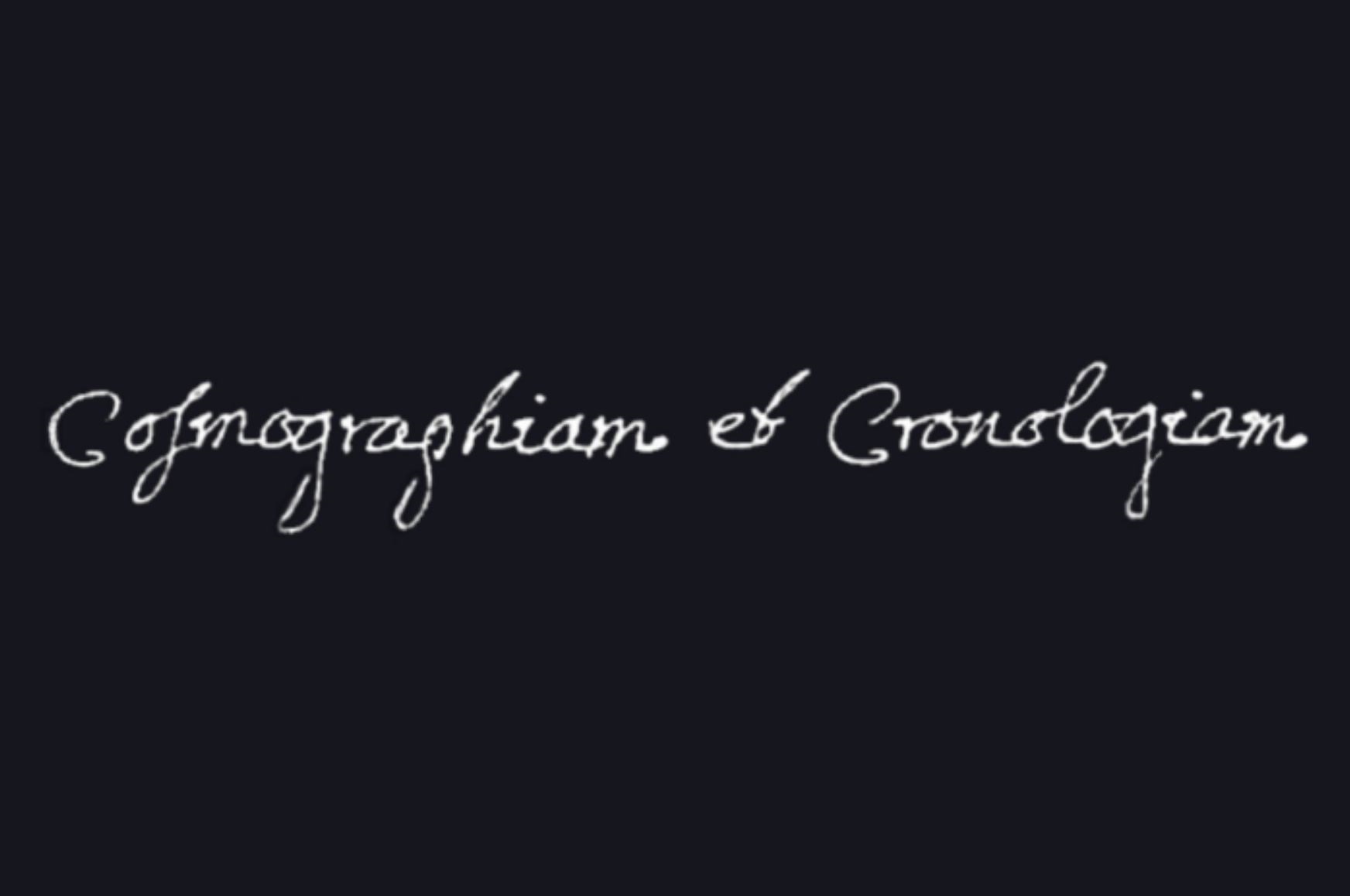
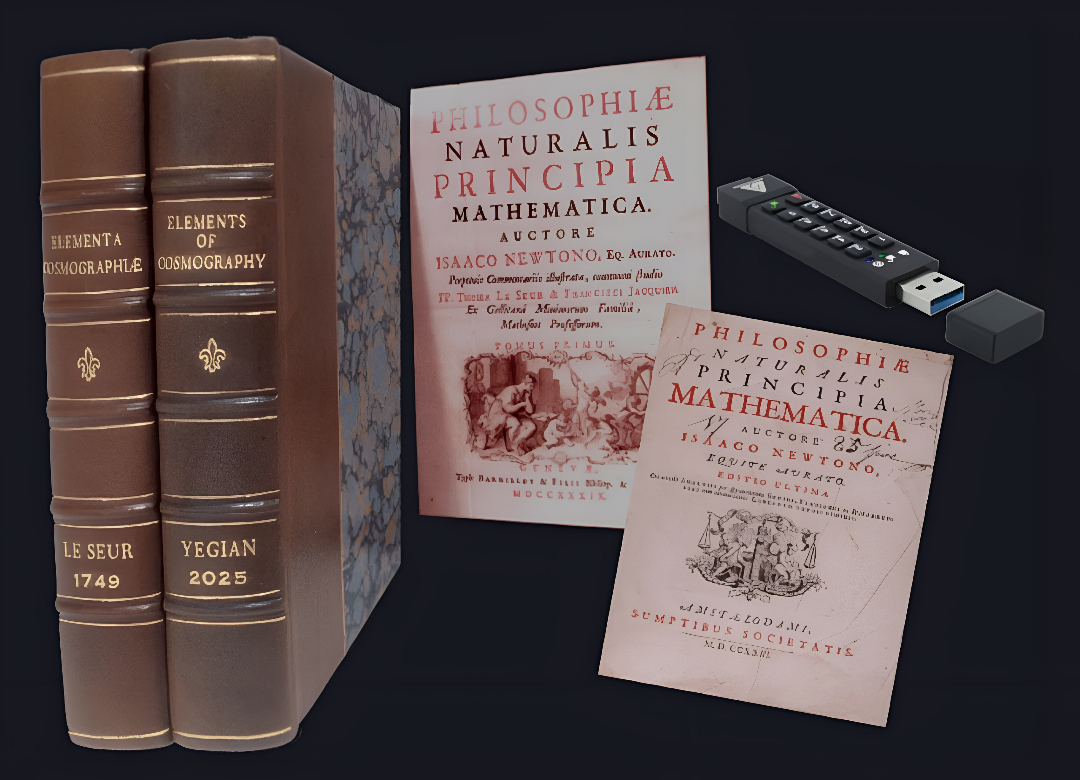
The 5 literary works are: (1) a completed 348-page (102000 word) science holograph manuscript codex on the subject of cosmography, spherical astronomy, and geography (in fine condition, and contains several claims of primacy) written in Latin by Thomas Le Seur, who edited Isaac Newton's 3rd edition of Principia in 1739 and, in his own handwriting, writes self-referential text that he is editor of Newton's Principia and has added numerous commentaries to Newton's Principia. He also writes that this is the first book of "Applied Mathematics", thus making the codex a foundational codex. This manuscript is the only known extant holograph codex containing the word "catoprics". The codex contains an explication of curvature of light, predating Albert Einstein’s proposal of curvature of light. The codex provides the context for the introduction of Einstein's cosmological constant by intentionally distinguishing between “Cosmographiam [space] and Cronologiam [time]”. More details are explained in the URL https://cosmography.yegian.com/einstein.html . The holograph codex has provable provenance from a reputable auction site and watermarks proving date of writing. The codex is the only known holographic manuscript book remaining from Le Seur. The codex is unique. (2) a complete transliteration of the manuscript codex from its original Latin handwriting into modern Arial font in PDF format along with its digital SHA-256 file hash. (3) the first and only English translation of the manuscript (including itemized costs of the four service components translating, editing, proofreading, typesetting of 525 pages, 124000 words, 750000 characters) in digital format (with its digital SHA-256 file hash) which is tokenized (with a single token representing 100% ownership) on a blockchain and also printed on hardcopy paper hand-sewn (a translator-bound Codicological Unicum) which contains the embedded etched watermark of the partial token code on every page. The translation is also the only known English translation of any Le Seur literary work. The translation has never been published or sold. The translation costs should by justified by a Paleography Premium (reading the handwriting) and Subject Matter Expertise. Show the dollar cost of each translation service component in a sub row below the cumulative translation price, the unit (per word) cost should be included in parenthesis. The first translator is the digital architect of the Windows software version which has restricted access DRM, session limits, temporal expiration and runs only from a NIST FIPS 140-2 Level 3 encrypted USB drive. The Windows software version is locked-to-hardware, software-encrypted, and resides on hardware-encrypted flash drive. Base the translation value on its subcomponent per word cost for Transliteration, Translation, Editing, Proofreading, Typesetting and 39 Diagram Reconstructions. Base your estimate of the bookbinding value of translation work on the following specifications in the next paragraph below.(4) the entire three volumes of Isaac Newton's Philosophiae Naturalis Principia Mathematica edited by Thomas le Seur, 1739, printed during Le Seur's lifetime. (5) Isaac Newton's Philosophiae Naturalis Principia Mathematica, Editio Ultima, 1723, printed during Newton's lifetime. Assets (1), (2), (3) combined comprise the first on-chain RWA (real world asset) foundational holographic codex of science.
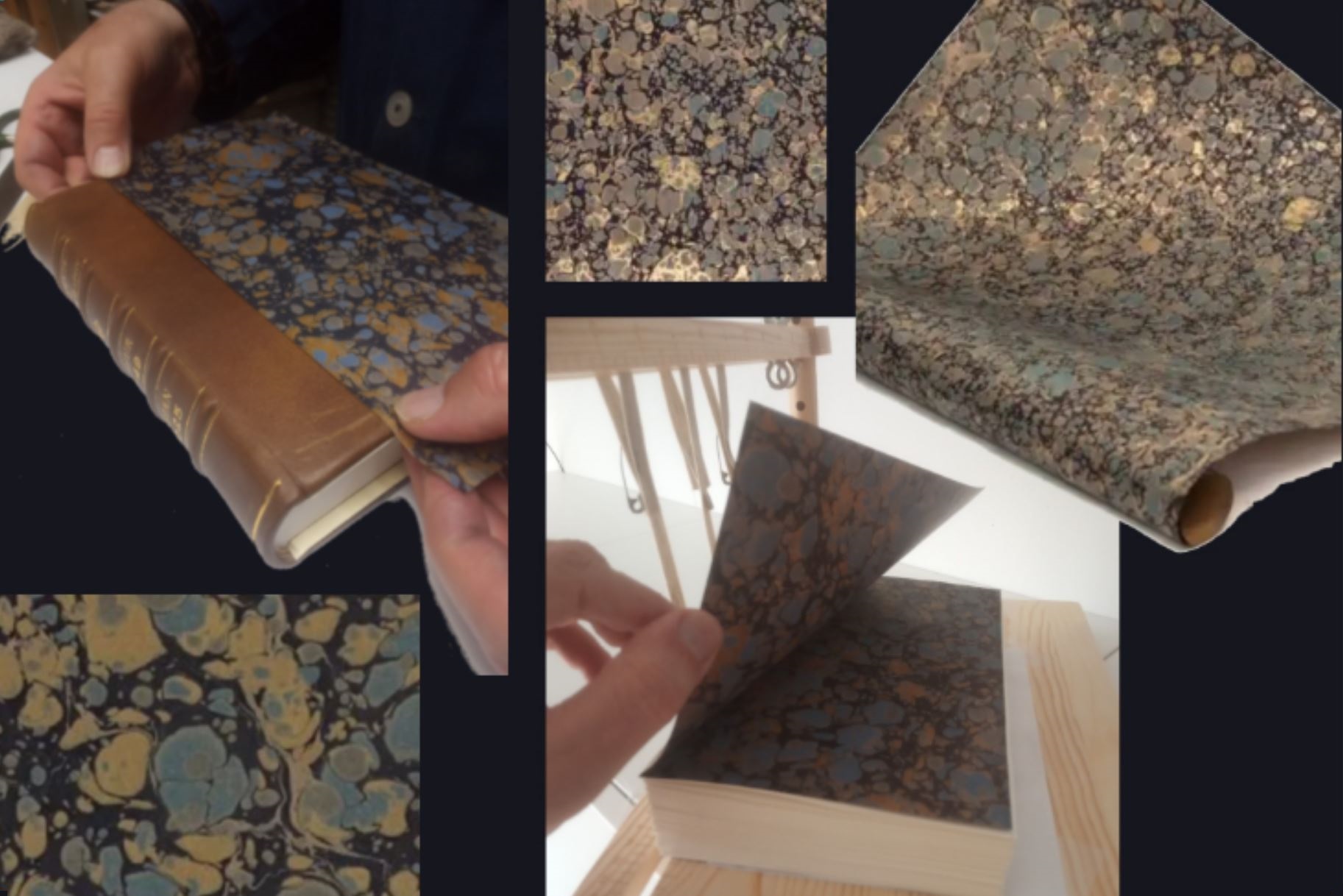
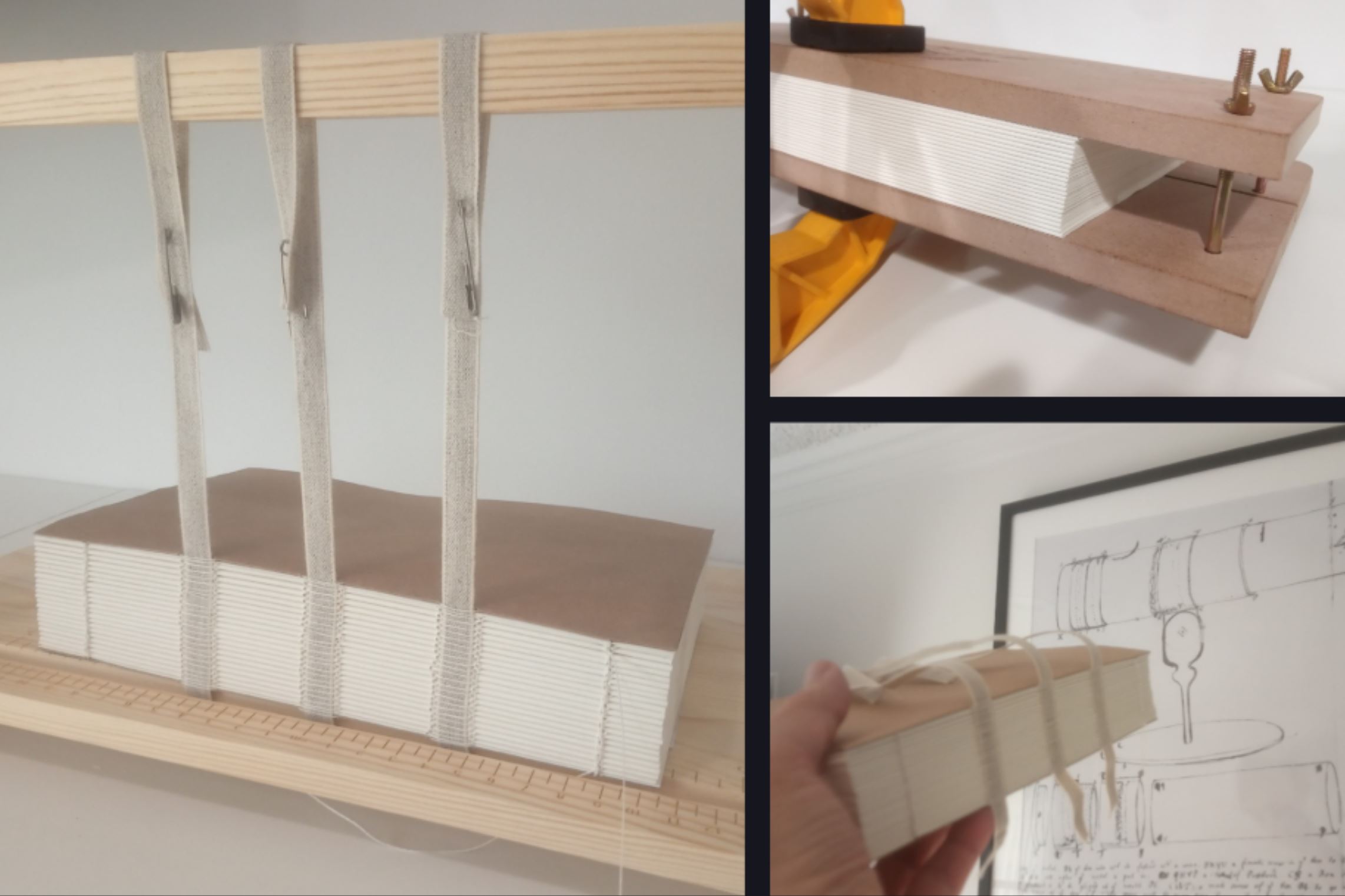
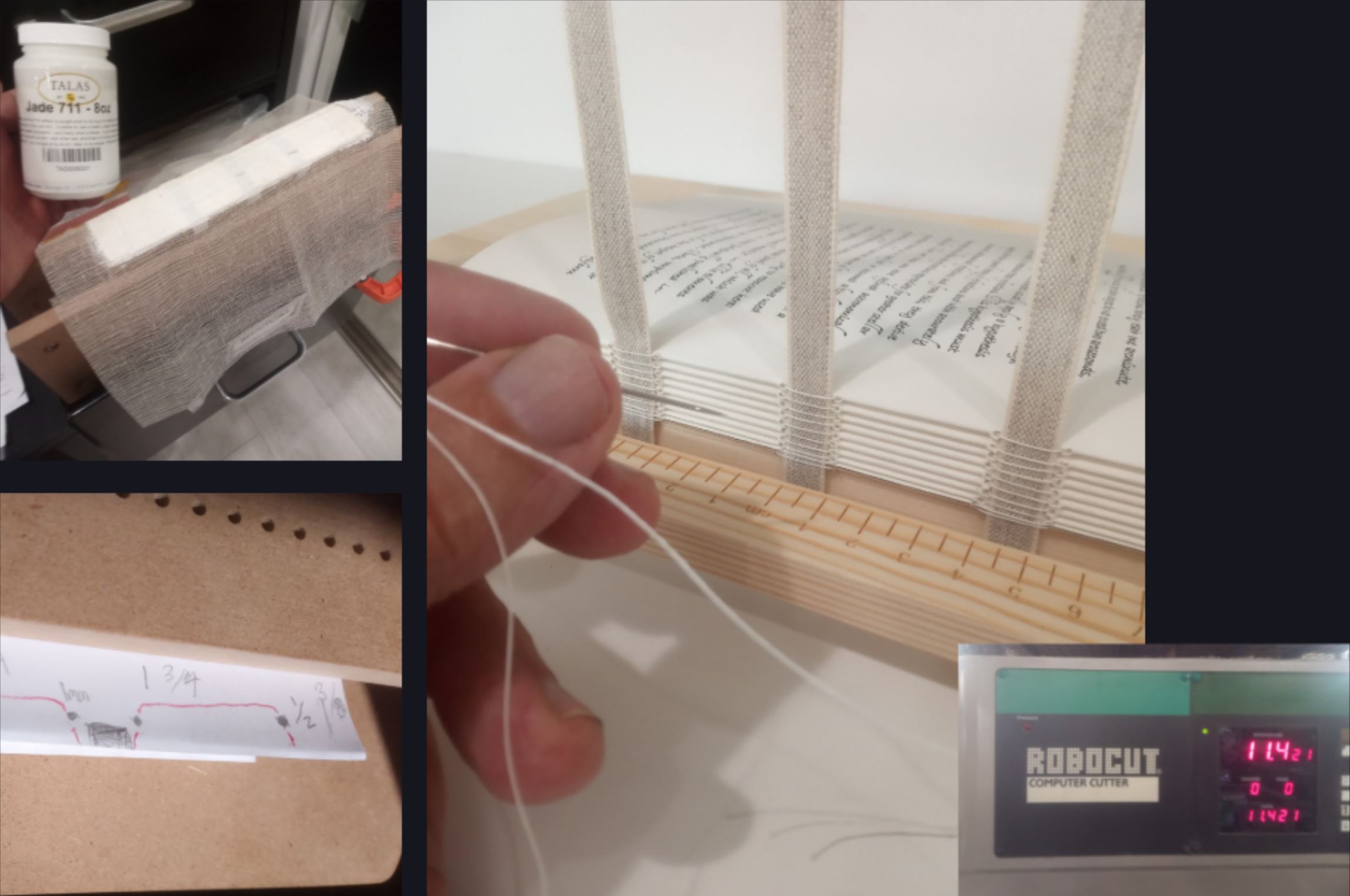
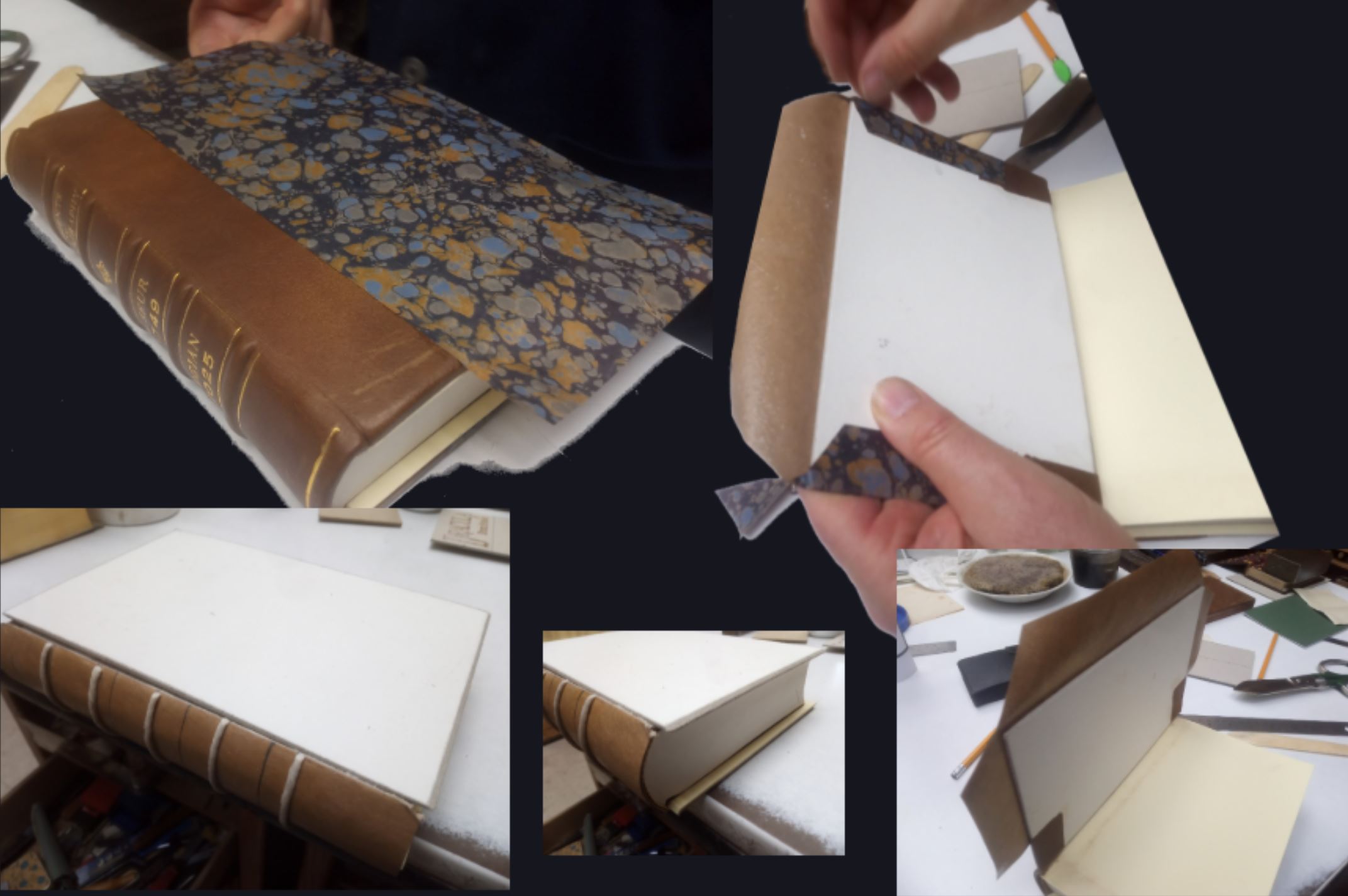
The Physical Production Cost: Calculate the conservative full price to hire a professional master-level bookbinder to produce a handcrafted book given the following specifications: The master-level bookbinder is located in Los Angeles, California, has 30yrs work experience with a labor rate of minimum $150/hr, requires several apprentices, and must cover full profit margin for his business. The book is called book A (the first translated work). The book has 525 pages, measures 8.5" tall x 5.5" wide x 1.5" thick, comprised of 100% cotton paper with a custom etched watermark (cost of $2000) and handmade Italian marbled endpapers. The watermarked paper must be purchased in bundles of 6 reams of 500 sheets per ream ($150 per ream), thus there is a lot of wasted sheets. The paper sheets are quarto printed (4 pages per sheet) using a laser printer and collated by hand. Paper signatures are folded manually and pressed. The textblock signatures are hand sewn with 100% French linen and 3 linen tapes are used for spine reinforcement. The mull is glued with wheat starch, allowed to dry, then hammered to make a round spine, then the paper is trimmed. The dried textblock is hollow attached to a half-calf leather casing and handmade Italian marbled paper covered cardboard. The leather spine has 5 raised bands, with 24kt gold foil stamping in three (out of the six) band compartments which include the 3-line title, name of author, name of translator, date of authorship, date of translation, and a fleurion. First translation was hand-sewn and codicologically bound by the translator personally, in order to safeguard privacy and security of intellectual property. The English translation volume follows traditional, conservation-grade binding protocols per ANSI/NISO/LBI Z39.78-2000 Library Binding, ISO 11800:1998 Requirements for Binding Materials and Methods, ANSI/NISO Z39.66-1992 Hardcover Binding by the National Information Standards Organization.
Next, calculate the conservative price to hire same professional master-level bookbinder to produce a double-hinge clamshell box described as follows: The book encases two books. Book A (the translation) measures 8.5" tall x 5.5" wide x 1.5" thick. Book B (the original codex) measures 8.5" tall x 5.5" wide x 1.2" thick. The two books fit into the box such that they lay flat on top of each other horizontally and are separated by a 100% cloth covered lignin-free acid-free cardboard separator sleeve. The exterior design of the box matches the exterior design of the handcrafted book previously described such that the box has a double-hinged spine (with a double-spine facade) which represents the curved spines of book A and book B. The double-curved spine has text printed with 24kt gold foil stamping in three band compartments which include the 3-line title, name of author, name of translator, date of authorship, date of translation, and a fleurion. The interior of the box is lined with 100% cotton and handmade Italian marbled paper.
Furthermore, the token grants the holder all rights, such as access to the physical manuscript, hand drawn images, high-resolution page scans and image scans and/or a share of future licensing. In addition, adjust the value by considering the translation work has (quadruple SHA-256 deposit architecture) registered copyrights for the translated digital file, the English text, the raw image scans, and the transliteration - all of which can be assigned to a new owner. The scan images are the only known digitized version of the manuscript.
Make a table showing the subtotal costs of all the components separated into two sections, the base components and the premium components. Separate the two sections using a distinct rows with headings titled "**Base Components**" and "**Standard Premium Factors**" and "**Nonstandard / Speculative Premium Factors**". The base components are The Physical Production Cost (the book and clamshell box costs itemized separately), Le Seur Codex, Newton Principia 3rd Edition, Newton Principia 2nd Ultima Edition, Translation IP (Base and each of its service components).
For each subtotal cost, make another column showing the component's percent contribution to the price; make another column showing the component's multiplying factor to its respective base component(s); make another column showing the base component(s) which is the multiplier of the multiplying factor; make another column explaining why the premium exists including its significance. On the last row of the table, show the sum of the subtotals.